Summer Heat and Your Roof: How Amarillo's Sun Ages Your Shingles
Hail and wind get all the attention in the Texas Panhandle, but the sun does quiet, steady damage that most Amarillo homeowners never notice until it is expensive. Long stretches of triple-digit heat, intense high-plains UV, and wide day-to-night temperature swings put your roof through a daily cycle of expansion and contraction all summer long. Summer heat roof damage in Amarillo is real, and unlike a hailstorm, it does not announce itself. It just shortens the life of your roof year after year.
Understanding how heat works on your roof helps you catch problems early and get the full lifespan out of the roof you already paid for. Here is what the Panhandle sun actually does up there, and what you can do about it.
How Extreme Heat and UV Age a Roof
Heat and ultraviolet light break roofing materials down from two directions at once. On a hot Amarillo afternoon, a roof surface can run far hotter than the air temperature, and that heat drives a cycle that wears the roof out faster than the calendar alone would suggest.
The first factor is thermal cycling. Shingles expand as they heat up during the day and contract as they cool overnight. In the Panhandle, where summer days are scorching and nights cool off sharply, that expansion and contraction happens hard, every single day. Over time it works materials loose, opens small cracks, and stresses the seals that keep water out.
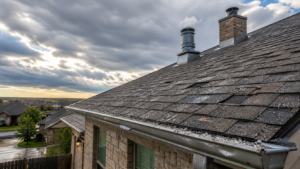
The second factor is UV exposure. Ultraviolet light steadily breaks down the asphalt and protective granules on shingles. As those granules wear away, the shingle underneath is left exposed, dries out, and becomes brittle. That is when you start to see curling, cracking, and blistering. UV also degrades other components, from sealants to the rubber boots around vent pipes, which are common spots for leaks to begin.
The result is a roof that ages faster than its rated lifespan. A roof that might last its full expected life in a mild climate can fall short in Amarillo simply because the sun never lets up.
The Attic Ventilation Connection
Heat damage is not only about the shingles on top. What happens underneath your roof matters just as much, and this is where attic ventilation comes in.
When an attic is poorly ventilated, summer heat gets trapped under the roof deck and builds up. That trapped heat does three things. It bakes your shingles from below, accelerating the same aging process the sun is causing from above. It drives up your cooling costs, because your air conditioner is fighting a superheated attic all day. And it can create moisture problems, since heat and trapped humidity together encourage condensation, mold, and wood rot over time.
Good ventilation lets that hot air escape and pulls cooler air through, keeping attic temperatures closer to reasonable. For Amarillo homes, proper ventilation is one of the most underrated ways to extend a roof’s life and keep summer energy bills in check. If your upstairs rooms are always hot and your cooling bills spike every July, your attic ventilation is worth a close look.
Warning Signs of Heat-Related Roof Damage
Heat damage builds slowly, but it does leave signs. Catching them early is the difference between a small repair and a shortened roof lifespan. Watch for the following:
- Shingles that are curling, cupping, or lifting at the edges
- Cracked, brittle, or blistered shingle surfaces
- Granules collecting in gutters and downspouts, which means the protective layer is wearing off
- Faded or bleached areas where UV has broken the surface down
- Cracked or dried-out sealant and vent boots
- Rising cooling bills and rooms that stay hot no matter how hard the AC works
Any one of these on its own may be minor. Several of them together usually mean your roof is aging faster than it should, and a professional look is worth the time before the next storm season arrives.
How to Protect Your Roof Through Panhandle Summers
You cannot change the Amarillo climate, but you can manage how much it costs your roof. A few steps make a real difference over the life of a roof.
Start with ventilation, since it addresses both roof aging and energy bills at the same time. Make sure your attic can breathe and that intake and exhaust are balanced. Next, stay ahead of small repairs. Cracked sealant, a worn vent boot, or a few lifted shingles are cheap to fix now and expensive to ignore, because summer heat turns small openings into leaks fast.
Material choice matters too, especially if a replacement is on the horizon. Lighter-colored and reflective roofing reflects more heat, and more durable shingle options hold up better against both sun and hail. If you are already thinking about a new roof, it is worth understanding how impact resistant shingles perform in this climate, since the same Panhandle weather that brings hail also brings relentless heat.
Finally, schedule regular inspections. A roof that is checked once a year gives you the chance to catch heat damage while it is still a repair rather than a replacement.
Why Summer Is a Smart Time to Check Your Roof
Mid-summer is an ideal window to look at your roof, and the timing is not random. The heat has been working on your roof for weeks, so any weaknesses are showing. You are also between the two hardest seasons for Panhandle roofs, past the worst of spring hail and ahead of the next round of storms and winter freeze cycles.
Catching heat-related wear now means you head into fall and winter with a roof that is ready for whatever comes next, rather than discovering a problem during the first hard storm. It is the difference between planning a repair on your schedule and scrambling for one on the weather’s schedule.
Final Thoughts
The Amarillo sun is patient, and that is exactly what makes it dangerous to your roof. Heat and UV do their damage slowly enough that most homeowners never see it coming until a repair turns into a replacement. Paying attention to ventilation, watching for the early warning signs, and getting a look at your roof mid-summer are simple habits that add years to the life of your roof.
If your energy bills are climbing or you have noticed any of the warning signs above, Valdez Roofing can take a look and tell you honestly where your roof stands.
Contact Valdez Roofing today to schedule a roof inspection